
building, systems, and brands that actually function. idea to shelf.
Good design gets attention. Great systems make companies money.
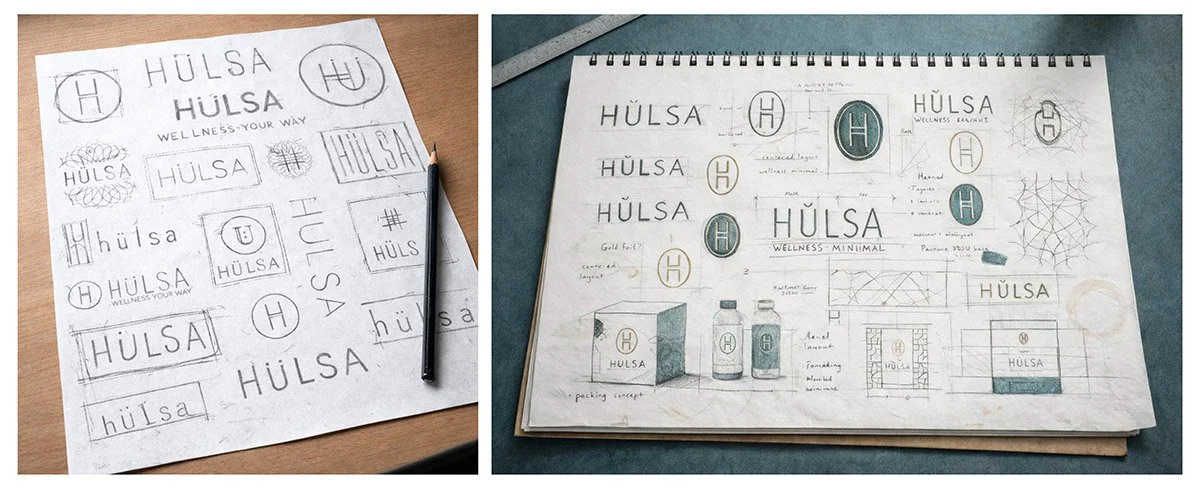
HÜLSA started as a concept and a question: what does a wellness brand look like when it's built with the same intentionality as a luxury product — from the first logo sketch all the way to the finished package on shelf?
The answer became a complete brand system, conceived and executed under one roof. Strategy, identity, packaging architecture, technical die lines, print specification, manufacturing coordination — every layer developed in sequence, with each decision informed by what comes next in the production chain.
Understanding the flow and timelines
〰️
Understanding the flow and timelines 〰️
The Concept & Positioning
The initial pitch to the client was built around a simple but rarely executed idea: most wellness brands design a logo, then figure out manufacturing later. HÜLSA would be designed the other way around — with production reality shaping every creative decision from the start.
The brand needed to sit in elevated wellness without looking like it. No soft gradients, no botanical clichés, no flowing scripts. Instead — structured geometry, intentional symmetry, and a visual language borrowed from luxury and architecture. Calm but confident. Minimal but symbolic. Something that earns its place on any premium shelf without explanation.
Positioning anchors around four pillars: personal wellness as individual journey, harmony across mind and environment, precision in both formulation and design, and modern ritual — daily practice elevated into lifestyle. The tagline, "Wellness Your Way," closes the loop without over-narrating it.
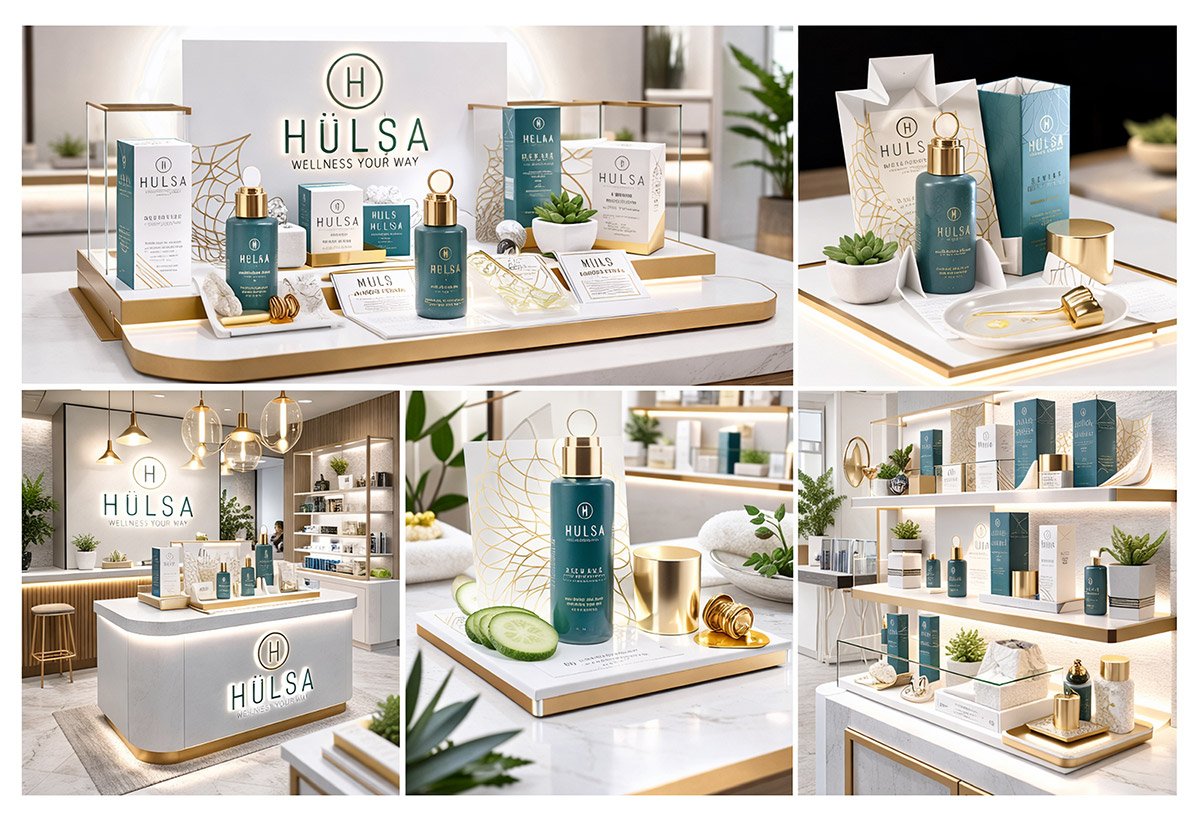
Identity Development
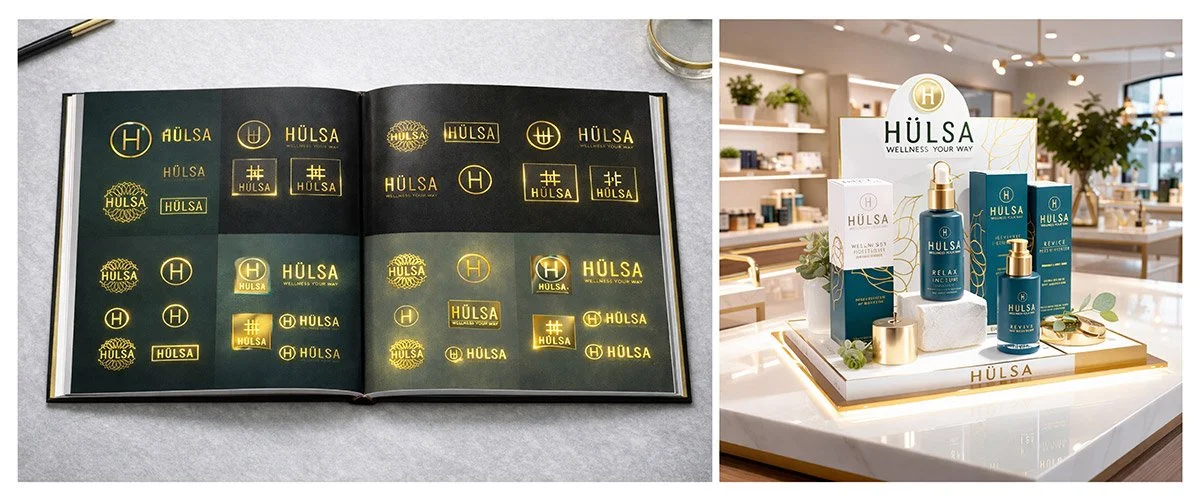
Rather than a single logo, I developed HÜLSA as a modular mark ecosystem — a coordinated family of assets built for flexibility across every touchpoint, from primary packaging to embossed closure seals to retail signage.
The Primary Wordmark was drawn with Scandinavian restraint — controlled spacing, architectural proportion, and a deliberate umlaut that signals European premium positioning without stating it. The Monogram Mark — a circular H emblem — was engineered for small-scale applications: stamps, embossing dies, foil seals, and social icons, where a full wordmark loses legibility and impact. The Geometric Symbol Mark functions as the brand's hero graphic, pulled from sacred geometry and designed specifically around spot gloss UV application — where the contrast between matte substrate and reflective finish creates a tactile, light-reactive experience that only works if the designer understands the print process it's being built for. A Framed Logo variant provides structure for formal retail and compositional applications.
Typography throughout is rooted in modern sans-serif with wide breathing room and controlled rhythm — chosen not just for aesthetics, but for legibility across print scales, embossing tolerances, and digital environments simultaneously.
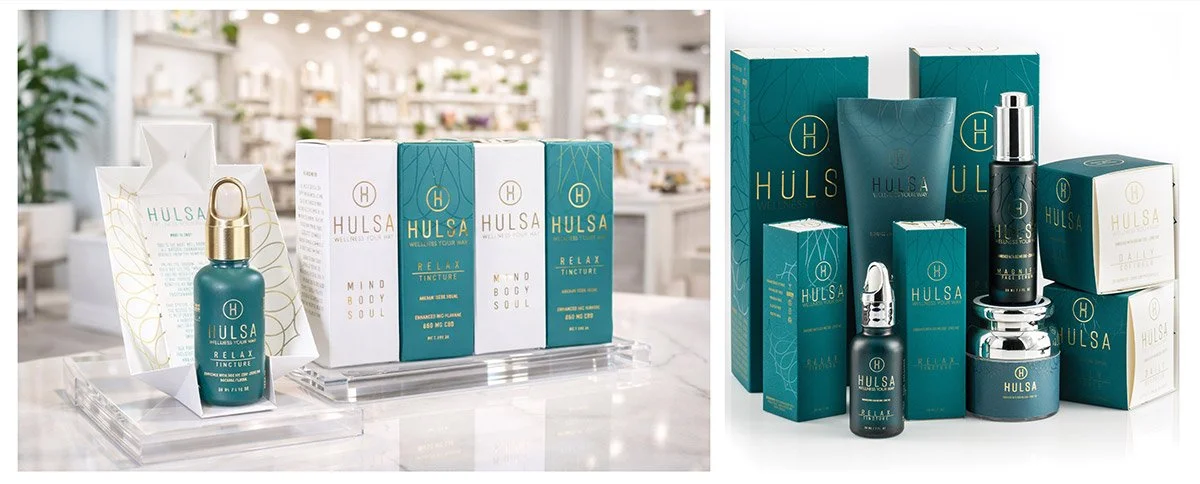
Color, Material & Finish Strategy
Primary palette: Deep Botanical Green, Matte Black, Neutral Warm Gray. Single accent: reflective gold foil — used with discipline, not decoration. It marks moments of value and ritual across the packaging system.
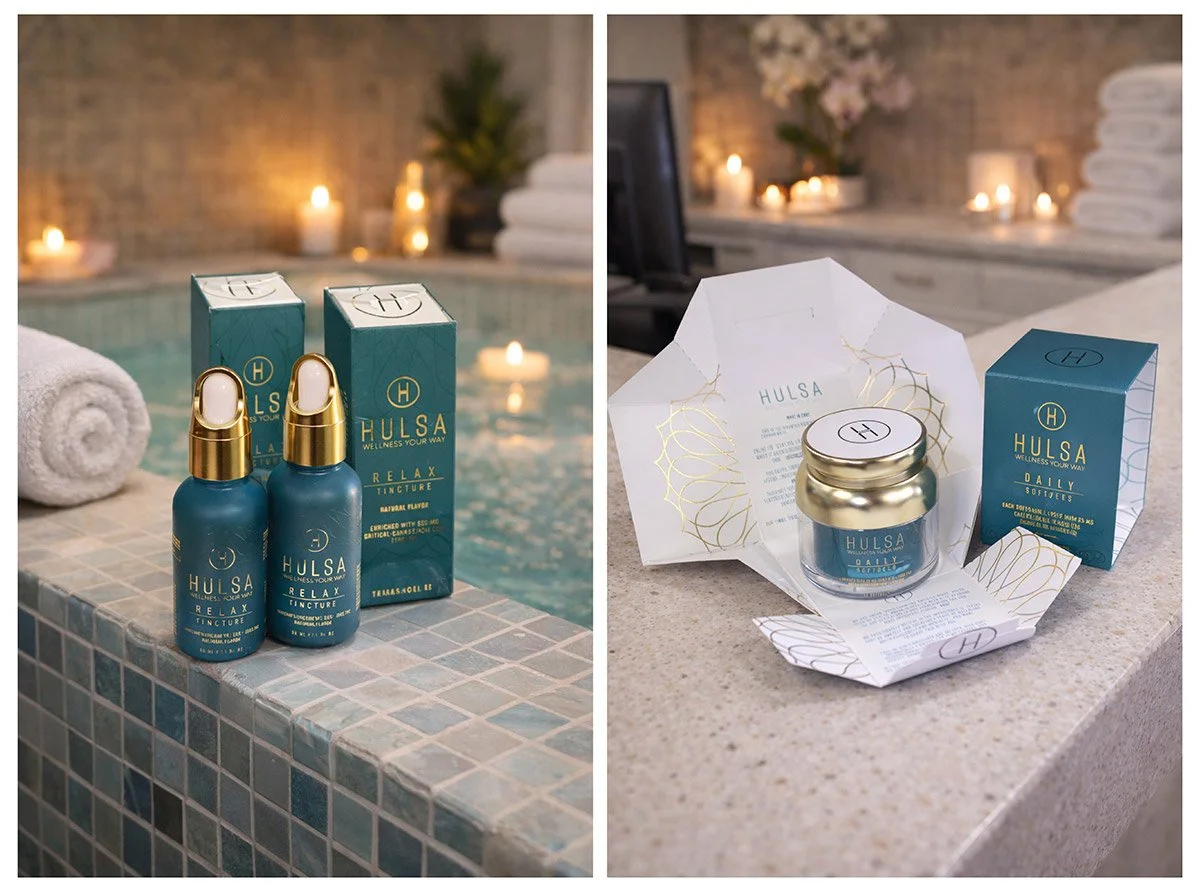
The material strategy was developed alongside the visual identity, not after it. Soft-touch matte coatings, bright reflective gold foil stamping, spot UV highlights, and deep contrast substrates were all specified as part of the original design intent — with vendor capabilities and print sequencing factored in from the pitch stage. Every finish choice had to survive the production process and arrive on shelf exactly as designed.
Technical Execution & Production Pipeline
This is where the work separates itself. Concept and aesthetics are table stakes — the real complexity lives in the production pipeline.
I developed all structural packaging from the ground up: dieline architecture, tolerances for substrate thickness, score and fold specifications, glue panel placement, and print bleed structures that account for the movement inherent in high-volume manufacturing runs. Foil die development was coordinated directly with the foil stamping process — die relief, registration targets, and substrate compatibility confirmed before creative was finalized, not after.
Prepress was handled in-house: color profiles, ink separation, overprint behavior, spot channel builds for UV and foil, and final file handoff packages built to each vendor's specification. Manufacturing was aligned in parallel — not handed off at the end. Timelines, material sourcing, press approvals, and production sequencing were managed as part of the creative process, ensuring that what was designed was what actually got made.
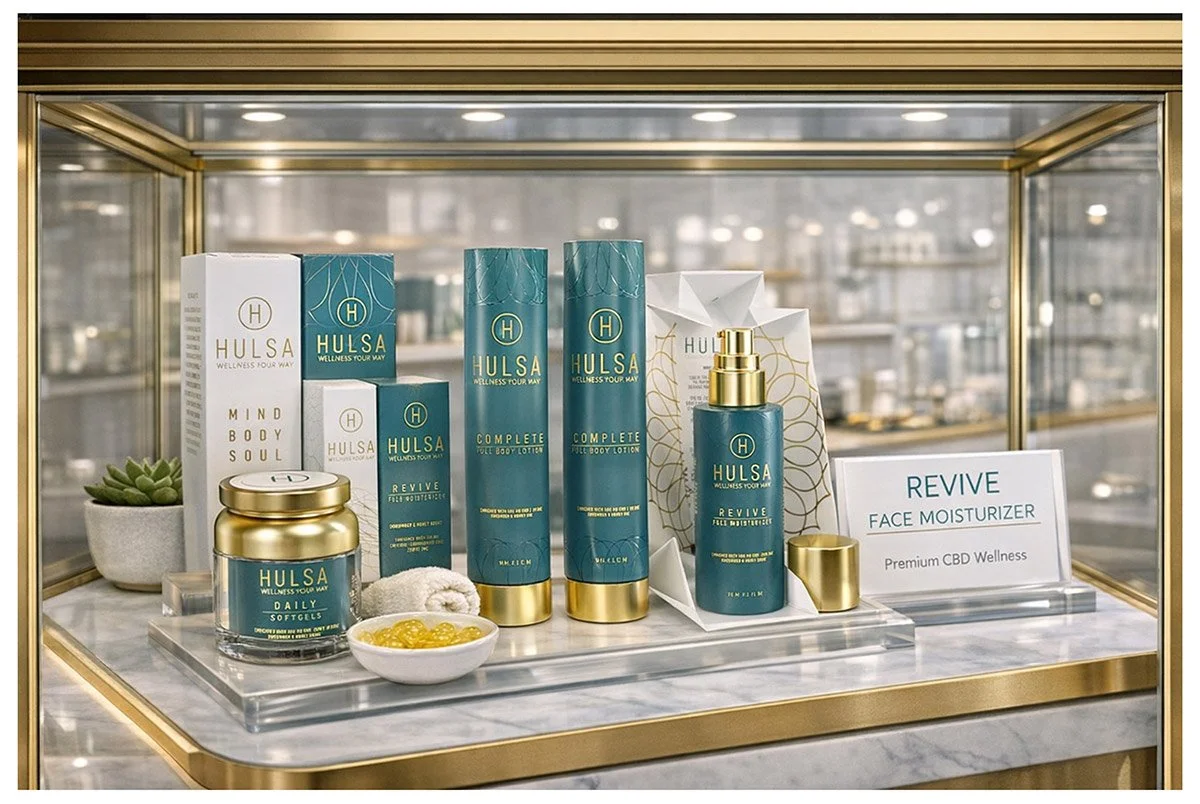
HÜLSA is a brand system that goes from concept to shelf without the gap that usually exists between design and production. It's scalable across SKUs and markets, consistent across every physical and digital touchpoint, and built with enough technical rigor that future growth doesn't require rebuilding the foundation.
It's the clearest example of how I work — and why the integrated approach matters.